Showing posts with label photography. Show all posts

Monday

Festival Of Colors !

While I forwarded hundreds of HOLI snaps from emails of friends and relatives from India to my friends here earlier this morning, the email responses I received back were quite interesting. While most of my acquaintances here admired the vibrant colors and ecstatic expressions in all the snaps, some common questions were-What's the significance of HOLI?, Why use colors to celebrate?, Why head out in groups to celebrate?, What's with the crazy facial expressions? Well, you can always lookup wikipedia for a detailed description but here are some quick pointers about HOLI also known as Festival Of Colors:
  • Structure: The HOLI celebration spans across two days. First day is known as Holika Dahan and the second day is known as Dhuli Vandana.
  • Timing: Holi is celebrated at the end of the winter season on the last full moon day of the lunar month Phalguna (~Feb/Mar). Usually at this time of the year, farms and fields are in full bloom and people thus get into festive spirit and expect a good harvest ahead! Also, singing, dancing & merrymaking serves to rejuvenate the otherwise impassive moods and spirits that prevail during winters.
  • Cultural Aspect: Like many other Indian festivals, it marks the victory of good over evil. Here's a short version of ancient story:
"Once upon a time there lived a ferocious king called Hiranyakashipu, who wished that everyone worshipped him. To his surprise, his son Prahlada worshipped Vishnu instead. Angry Hiranyakashipu then tried several ways to kill his son for his utter defiance but Prahlada would miraculously survive every time. Finally, the evil king asks his sister Holika, who had a special gift to escape from a fire unscathed, to enter into fire with Prahlada on her lap. When the fire commenced, interestingly Holika burns and Prahlada stays unharmed due to his sincere goodness, clear heart & pure spirit."

Indians celebrate this event (known as Holika Dahan) by lighting a small fire and praying together with their families on the day prior to Holi.
  • Colors: On second day (Dhuli Vandana), people head out from their homes in morning and splash water colors & dried colors (gulal) on each other. Kids chasing each other with water color filled ballons is a common sight. in communities get together and form tolis (small groups) and playfully apply colours and exchange greetings as they hope along from one house to another. The idea is to drench everyone around you and have pure uninhibited fun!
  • Social Aspect: By late afternoon, people head back to their homes to clean themselves up and get some rest. Later in the evening, people put on new traditional dresses (sherwanis/sarees as the case may be ;)) and visit respective friends to exchange sweets, greetings and well wishes. The idea is to reconnect with those who matter most to you and strengthen your emotional bonds with everyone else.
That said, do check out "Celebration of Colors" (An excellent rendition of true spirit of HOLI by a truly amazing photographer!) by Poras Chaudhary to visualy capture HOLI. As some of you set out to splash colors of happiness, colors of friendship, colors of love and colors of success to your loved ones - here's me wishing you a very joyous HOLI :D

"Colors, like features, follow the changes of the emotions."~Pablo Picasso
[Image Courtesy-© Poras Chaudhary]
Bookmark and Share

Thursday

Decoding Diptychs with Mori Insinger

The concept of Duality has intrigued physicists, mathematicians, economists and even common-man since time immemorial. Interpretations of people may be radically different but in simple terms duality is about interchangeability of subject's role/form/shape/behavior based on interpretation of an external unbiased observer. Whenever we see an artwork, an illustration, a photograph or a design-we usually process the information in its entirety and base our interpretation of artwork on colors we see, positive and negative spaces we observe, proximity of objects (esp. in photographs) we judge and mood the artwork elicits etc.
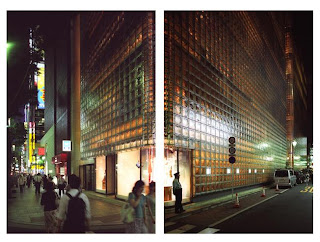
A while ago, while browsing my ART journal, I came across the word DUALITY (I had scribbled it many times on the same page!) and I was instantly reminded of talk by Mori Insinger, a Boston-based fine art photographer, at the Danforth Museum on 31-OCT-2009. I logged onto the artist's website, downloaded the photograph and once again found Mori's work mystical and very engaging. I decided to connect with Mori via the web to understand this series of photographs (Mori refers to them as DIPTYCHS) and relate it with what I've learned about ART so far.

Diptychs are dual-frame images that emphasize not just the elements in the photographs but even the space surrounding them. Mori writes:
  • "The Diptych Format is a way of consciously showing the context of a setting as much as the central 'subject' itself".
  • "The implicit boundaries and inherent grooming within a setting are part of an aesthetic which speaks to how inhabitants within an environment present themselves unto others."

Based upon my conversation with Mori, here's a brief summary this specific Diptych, which I found simply fascinating:

  • Setting: The images for the diptych "Ginza District, Tokyo, Japan" featuring an upper-class fashion boutique, were made on a late summer evening in 2006 and the print was made in 2007.
  • Balance: On one hand bright lights, subtle feeling emanated by glass, concrete, stone, and asphalt gives this Diptych a tangible & tough look. On the other hand transparency of the building and amalgamation of bright & dark colors gives it a warm inviting tone.
  • Perspective: Eyes are drawn towards the diagonal lines emerging from center on either side and a sense of depth is developed right away.
  • Contrast: Image on the left of the boutique shows the street buzzing with people and activity as against the serene lifeless image on the right hand side.
  • Relationship: The image as a whole makes the viewer ascertain and evaluate the nature of relationship between organic (people) and inorganic (building, lights) elements.
  • Aesthetics: Fashion Boutique, the central element in the Diptych, together with distinctive boxed glass windows, concealed lighting and surrounding void space gives a sense of style and aspirations of upper-class fashion enthusiasts.
  • Energy: This Diptych certainly has a profound visual energy, which results in instant analysis process by the viewer (What's going on here?)

In our tightly packed suburbs and cities, it can be difficult to spot the 'beautiful subjects' that live in our midst and perhaps that's why most of us escape to far flung places when we take vacations hoping to break away from our otherwise fast-paced complex lives. But the moment we realize that we share cities with several other elements - animals, museums, playgrounds, shopping malls, schools and churches etc. and that we have an important role to play in this grand ecosystem of life, we start developing a deeper connection with nature, with fellow human beings and with our environment. In that respect, Diptychs are just the right messengers and reinforce the fact that our environment is much more than a simple combination of the tangible things we've acquired (vehicle, house, music player) and we can learn to become a part of this beautiful, complex, and exciting world once we start observing aesthetic subjects in our immediate environment!

While you are on Mori's website (spc. aspiring photographers)-do check out Mori's other impressive projects (Landscapes and Panoramas) too. His ability to capture vibrant colors, unseen objects and put them all together to create visually inspiring photos is extraordinarily inspiring indeed!

"What is important to my work is the individual picture. I photograph stories on assignment, and of course they have to be put together coherently. But what matters most is that each picture stands on its own, with its own place and feeling."Steve McCurry

[Images Courtesy-© Mori Insinger, Dedon]

Bookmark and Share

Sunday

Sub Surface View with Trisha Barry

[Image Courtesy-©Trisha]

Ever since we learned to communicate, we look forward to occasions where we can share our experiences, express our true emotions, connect to great people and be a part of something bigger than our own perceived selves. Over the course of history we have devised several innovative ways to communicate - language, gestures, music, dance, art, writing, emails and even SMSs and we'll certainly keep evolving on that front but the basic communication drill hasn't changed much.

All our efforts are usually aimed at sharing stories - about ourselves, about our extreme life experiences, about the super nice people we meet in our lives and about our sources of inpiration. And as listeners (if one is hearing a story) or viewers (if one is viewing the pictorial representation of a story), when we see reflection of our true selves in characters / plots of stories - "Ahaaa-I see!" moment comes and a related impression gets carved in our minds for ever.

A similar thing happened to me two months ago. On September 13th this year, I was at Danforth Museum to attend the museum's annual OPEN HOUSE. It was a very well organised event and thanks to Danforth, every participant had an opportunity to attend art workshops, meet art faculty, take a guided museum tour & most important of all meet ARTISTS! Long story short, that's how I met Trisha Barry, a fine art photographer, and I have to admit that connection was immediate. After I was done expressing my inquisitiveness about her "Pride, 2008" work, she smiled back and told me briefly about the setting and context in which photograph was taken. I was inspired right away!! As I ruminated about Pride, 2008 for weeks that followed, I realized that the meeting had stirred up many questions in my mind and I promised myself to do some research and find out answers to all my questions soon. Here's a snapshot of Pride, 2008:

The photograph was taken in "Nichols and Stone", which has been known to sell the finest solid wood furniture in America since 1762. As ace company was shutting down its operations in Gardener, MA in early 2008, most of us would have dismissed this event as the obvious fate of any company who is not doing well financially in business world. However, Trisha had a difference of opinion. She decided to venture into the factory, observe the factory craftsmen, spend time with them in their last days at factory and get a first hand experience of the situation herself. Most of the factory people she watched and talked to shared the following qualities, which Trisha has captured brilliantly in her photographs.

  • They were all ace artisans and exhibited perfectionist attitudes.

  • They took immense pride in their work.

  • They worked very hard everyday and for several years to deliver ace products.

  • They had boundless faith in each other.

  • They shared an extraordinary affectionate bond amongst themselves.

Take a look at the awe-inspiring description penned down by Barbara, one of the artisans at Nichols and Stone.


When life treats us with interesting challenges or we face ourselves in a Catch-22 situation, we usually tend to look for inspiration and drive in a variety of distant sources-people, places or things. Trisha's photographs illustrate that inspiration can be tapped from just about any environment and anywhere - one just needs to learn to see the sub surface view! If you cherished Trisha's photographs too, you might wish to check out the foll. links:

  • Nichols and Stone - link
  • 12 Months with New England Farmer - link
  • Trisha's latest stint with fishermen at Newport - link

Farmers >> Craftsmen >> Fishermen >> ? - I wonder what Trisha's upto next :D

"It's on the strength of observation and reflection that one finds a way. So we must dig and delve unceasingly."~Claude Monet